
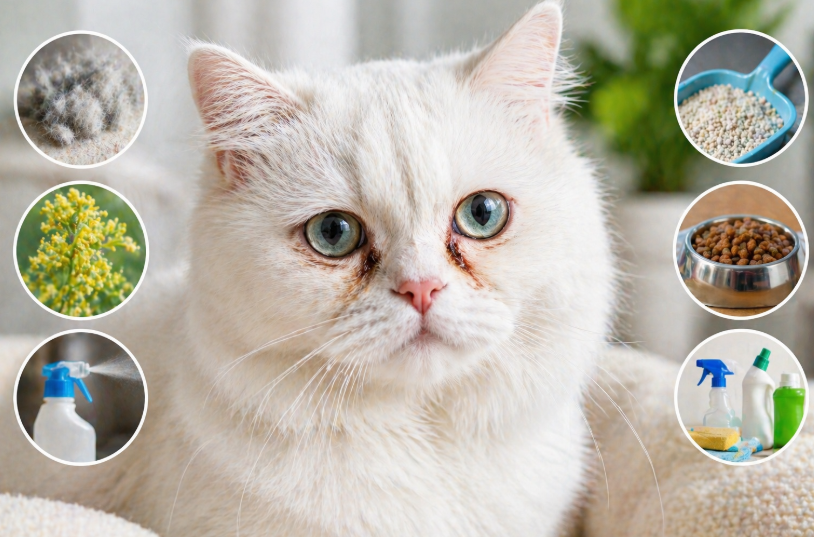
Understanding cat tear stain allergies is important if your cat constantly has discoloration under the eyes. While tear stains may look harmless, they often signal irritation caused by allergens. These triggers increase tear production, which leads to moisture buildup and visible staining over time.
When cat tear stain allergies are the root cause, cleaning alone will not fix the issue. Instead, you need to identify what is triggering the reaction and reduce exposure. With the right combination of care, environment control, and diet, you can manage both the cause and the symptoms effectively.
How Allergies Lead To Tear Staining In Cats
To better understand cat tear stain allergies, it helps to look at how your cat’s body reacts. When exposed to allergens, the immune system responds by producing extra tears. This process is meant to protect the eyes, but it also creates constant moisture.
That moisture collects under the eyes and mixes with natural compounds. Over time, it causes reddish or brown stains. In addition, bacteria and yeast can develop in damp fur, making the stains darker and harder to remove.
Because of this cycle, it is essential to address the cause rather than only cleaning the surface. Managing the trigger is key to long-term improvement.
Environmental Factors That Trigger Eye Irritation
Many cases of cat tear stain allergies come from environmental sources. Indoor allergens such as dust, mold, and cleaning products can irritate your cat’s eyes. Even small amounts can lead to noticeable tearing.
Outdoor allergens, including pollen, can also enter your home and affect your cat. Seasonal changes often increase these triggers, which explains why staining sometimes gets worse during certain times of the year.
Strong scents from air fresheners or sprays may also contribute to irritation. To learn more about managing indoor allergens, you can visit https://www.epa.gov/indoor-air-quality-iaq.
Reducing these triggers can significantly improve your cat’s comfort and reduce staining.
Food Sensitivities And Their Impact
Diet is another important factor behind cat tear stain allergies. Some cats react to certain ingredients, which can lead to increased tearing. Low-quality fillers, artificial additives, and specific proteins may cause sensitivity.
When your cat consumes these ingredients, the body may respond with inflammation, including watery eyes. This extra moisture contributes directly to staining.
Switching to a high-quality, limited-ingredient diet can help reduce reactions. Clean, filtered water may also support better hydration and reduce impurities. Addressing diet is a practical step toward long-term improvement.
Contact Irritants In Everyday Items
In some cases, cat tear stain allergies are caused by direct contact with irritants. Grooming products, bedding, and even food bowls can trigger reactions.
For example, shampoos with strong chemicals may irritate the skin around the eyes. Dusty or unwashed bedding can also increase exposure to allergens. Plastic bowls may harbor bacteria, which can worsen symptoms.
Switching to stainless steel bowls and using gentle grooming products can help. Keeping your cat’s environment clean also reduces the risk of irritation.
Recognizing Signs Of Allergy-Related Staining
When cat tear stain allergies are present, there are usually other signs besides discoloration. Your cat may have watery eyes throughout the day or show redness around the eye area.
Some cats rub their face or appear more sensitive to touch. You might also notice mild swelling or discomfort. These signs suggest that allergies are contributing to the problem.
Recognizing these symptoms early allows you to act quickly. Instead of focusing only on cleaning, you can address the underlying cause more effectively.
Daily Grooming And Cleaning Routine
Consistent care plays a major role in managing staining. While addressing triggers is important, daily habits help prevent buildup. Gently cleaning the area around the eyes removes moisture and reduces bacteria growth.
Use a soft cloth or pet-safe wipe to clean your cat’s face. Keep the fur around the eyes trimmed to minimize moisture retention. These simple steps support better hygiene.
You can also improve your routine by following guides like /cat-grooming-basics or /daily-pet-care-routine.
Regular care works best when combined with efforts to reduce allergens.
Improving Indoor Air And Cleanliness
Maintaining a clean home environment helps reduce the effects of cat tear stain allergies. Dust and airborne particles can trigger reactions, so regular cleaning is essential.
Vacuuming frequently and using air purifiers with HEPA filters can improve air quality. Washing your cat’s bedding regularly also removes allergens that may cause irritation.
Good ventilation helps prevent buildup of indoor pollutants. These steps create a healthier environment for your cat and reduce tear-related issues.
Combining Multiple Solutions For Better Results
In many situations, cat tear stain allergies are caused by a combination of factors. Addressing only one trigger may not solve the problem completely. A balanced approach works best.
For example, improving diet while also reducing environmental allergens often leads to better results. This combined strategy targets both internal and external causes.
Over time, you may notice less tearing and lighter stains. This shows how effective a complete approach can be.
When To Consult A Veterinarian
If staining continues despite your efforts, professional help may be needed. Persistent symptoms can indicate underlying issues such as infections or blocked tear ducts.
A veterinarian can identify the exact cause and recommend proper treatment. Early intervention helps prevent complications and ensures your cat stays comfortable.
Seeking help is especially important when other symptoms appear alongside staining.
Conclusion
Understanding cat tear stain allergies helps you move beyond surface cleaning and focus on the real cause. While stains may seem minor, they often reflect deeper issues related to environment, diet, or daily care.
By identifying triggers and making simple adjustments, you can reduce irritation and improve your cat’s comfort. Consistent grooming, proper nutrition, and a clean home all contribute to better results.
With the right approach, managing tear stains becomes easier. Over time, your cat will look healthier and feel more comfortable.
FAQ
- Can allergies cause tear stains in cats?
Yes, allergic reactions often increase tear production, which leads to staining. - What environmental triggers affect cats the most?
Dust, pollen, mold, and strong household scents are common triggers. - Does diet play a role in tear staining?
Yes, certain ingredients can cause sensitivities that lead to excessive tearing. - How can I reduce allergens in my home?
Regular cleaning, air purifiers, and washing bedding can help reduce exposure. - When should I see a vet about tear stains?
If staining persists or worsens despite proper care, consult a veterinarian.

