
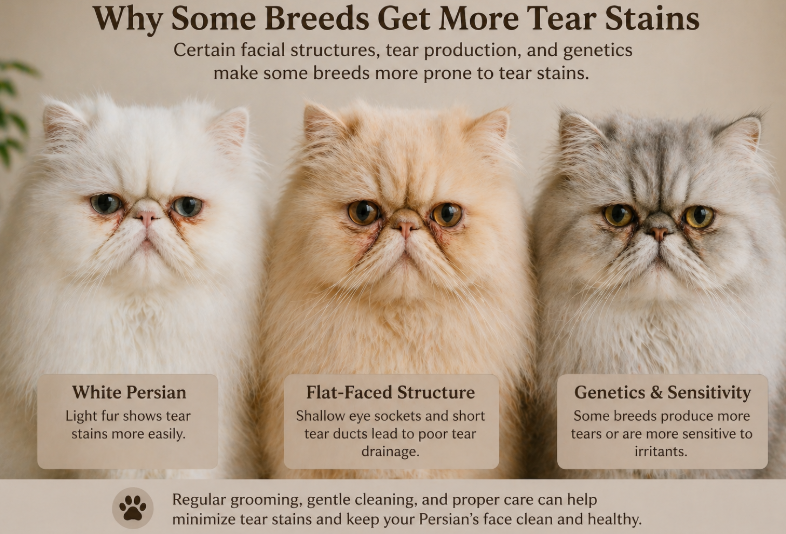
Many pet owners notice that certain pets seem to struggle more with tear stains than others, which often leads to confusion and frustration. The truth is, breeds get more tear stains due to a mix of genetics, facial structure, and natural tear production. While all pets can develop staining, some are simply more prone to it, even with proper care. Understanding why this happens can help you manage the issue more effectively and reduce the appearance of stains over time.
When you recognize that breeds get more tear stains because of physical traits rather than poor hygiene, your approach changes. Instead of blaming grooming habits alone, you begin to focus on prevention, maintenance, and realistic expectations. This shift allows you to support your pet’s needs while keeping their eyes clean and comfortable.
How Facial Structure Influences Tear Stains
One of the main reasons breeds get more tear stains is their unique facial structure. Flat-faced breeds, often called brachycephalic breeds, tend to have shallow eye sockets and shorter tear ducts. Because of this, tears do not drain properly and instead spill onto the fur around the eyes.
This constant moisture creates the perfect environment for staining. Over time, the fur absorbs the tears, leading to discoloration that becomes more noticeable. Additionally, the shape of the face can cause tears to pool in specific areas, making stains appear darker and more persistent.
Even with regular cleaning, these structural factors remain. That is why breeds get more tear stains regardless of how carefully they are groomed. However, understanding this helps you focus on managing moisture rather than trying to eliminate it completely.
The Role Of Tear Duct Function
Another reason breeds get more tear stains is related to tear duct function. In many pets, tear ducts drain fluid away from the eyes efficiently. However, in certain breeds, these ducts may be narrow, blocked, or not fully developed.
When tear ducts do not function properly, excess tears overflow onto the face. This leads to constant dampness, which contributes to staining. In some cases, the issue may be mild, while in others it can be more noticeable and require additional care.
Regular grooming helps manage the symptoms, but it does not change how the tear ducts work. Therefore, knowing that breeds get more tear stains due to drainage issues allows you to adjust your expectations and care routine accordingly.
Why Coat Type Makes A Difference
Coat type is another important factor explaining why breeds get more tear stains. Pets with light-colored or white fur tend to show stains more clearly. Even small amounts of moisture can create visible discoloration against a pale coat.
In contrast, darker-coated pets may still experience tear staining, but it is less noticeable. This difference often leads owners to believe that some pets do not have the problem at all, when in reality it is simply less visible.
Long fur around the face can also trap moisture, which increases staining. When hair remains damp for extended periods, it becomes more prone to discoloration. This is another reason breeds get more tear stains, especially those with thick or flowing facial fur.
Genetics And Natural Tear Production
Genetics play a significant role in why breeds get more tear stains. Some pets naturally produce more tears due to their genetic makeup. While tears are essential for eye health, excessive production can lead to overflow and staining.
In addition, inherited traits can affect how the body responds to irritants. Certain breeds may be more sensitive to environmental factors, which increases tear production. This combination of genetics and sensitivity explains why some pets develop stains more easily than others.
Although you cannot change genetics, you can manage the effects. By focusing on grooming and care, you can reduce the impact of excessive tearing and keep the eye area cleaner.
Environmental Factors That Increase Staining
While genetics are important, environmental factors also influence why breeds get more tear stains. Dust, pollen, and household irritants can cause the eyes to produce more tears. This reaction is the body’s way of protecting the eyes, but it can lead to staining over time.
Indoor environments with poor air quality can make the problem worse. For example, smoke or strong cleaning products may irritate the eyes and increase tear flow. By improving your pet’s environment, you can help reduce these triggers.
Even small changes, such as keeping living areas clean and well-ventilated, can make a difference. When combined with proper grooming, these adjustments help manage the reasons breeds get more tear stains.
The Impact Of Diet On Tear Stains
Diet also plays a role in why breeds get more tear stains. Poor-quality food or ingredients that trigger sensitivities can increase tear production. As a result, pets may experience more frequent staining.
Artificial additives, low-quality proteins, and certain fillers can contribute to this issue. When the body reacts to these ingredients, it may produce excess tears as part of the response. Over time, this leads to more noticeable stains.
Switching to a balanced, high-quality diet can support overall health and reduce inflammation. While diet alone may not eliminate staining, it helps manage one of the contributing factors. This is especially important for breeds that are already prone to tear stains.
Grooming Challenges In High-Risk Breeds
Because breeds get more tear stains, grooming becomes both more important and more challenging. Regular cleaning is necessary to remove moisture and prevent buildup. However, frequent grooming must be done carefully to avoid irritation.
Sensitive areas around the eyes require gentle handling. Using soft cloths or pet-safe wipes helps maintain cleanliness without causing discomfort. In addition, trimming the fur around the eyes can reduce moisture retention and improve airflow.
Consistency is key. Short, regular grooming sessions are more effective than occasional deep cleaning. By maintaining a steady routine, you can manage the factors that cause breeds to get more tear stains.
Managing Expectations And Long-Term Care
It is important to understand that when breeds get more tear stains, complete elimination may not always be possible. Instead, the goal should be to reduce staining and keep the eye area healthy. With consistent care, you can significantly improve your pet’s appearance.
Long-term management involves combining grooming, proper diet, and environmental adjustments. Each element contributes to better results, even if stains do not disappear entirely. Over time, these efforts create a noticeable improvement.
Patience is essential. Changes may take time, but consistent care leads to lasting benefits. By focusing on what you can control, you make it easier to manage tear stains effectively.
When To Seek Professional Advice
In some cases, the reason breeds get more tear stains may involve underlying medical issues. If staining is excessive or accompanied by redness, swelling, or discharge, it is best to consult a veterinarian.
A professional can check for blocked tear ducts, infections, or other conditions that require treatment. Addressing these issues early prevents further complications and supports your pet’s health.
Professional grooming may also help, especially for breeds that require frequent maintenance. Combining expert care with your home routine ensures the best results.
Conclusion
Understanding why breeds get more tear stains helps you approach the problem with clarity and confidence. Instead of focusing only on surface cleaning, you begin to address the underlying causes such as facial structure, genetics, and environmental factors. While some pets are naturally more prone to staining, consistent care can significantly reduce its impact.
By combining gentle grooming, proper nutrition, and a clean environment, you create a routine that supports healthier eyes and a cleaner appearance. Although tear stains may not disappear completely, they become far more manageable. In the end, informed care makes all the difference in keeping your pet comfortable and looking their best.
FAQ
1. Why do some pets have more eye staining than others?
Some pets are more prone due to their facial structure, genetics, and tear duct function.
2. Are tear stains harmful to pets?
Tear stains are usually harmless, but they can indicate underlying issues if severe or persistent.
3. Can grooming reduce staining in sensitive breeds?
Yes, regular gentle grooming helps remove moisture and prevent buildup around the eyes.
4. Does fur color affect how visible stains are?
Yes, lighter fur shows stains more clearly, making the problem more noticeable.
5. When should I consult a veterinarian about tear staining?
Seek advice if you notice excessive tearing, redness, or unusual discharge around the eyes.

