
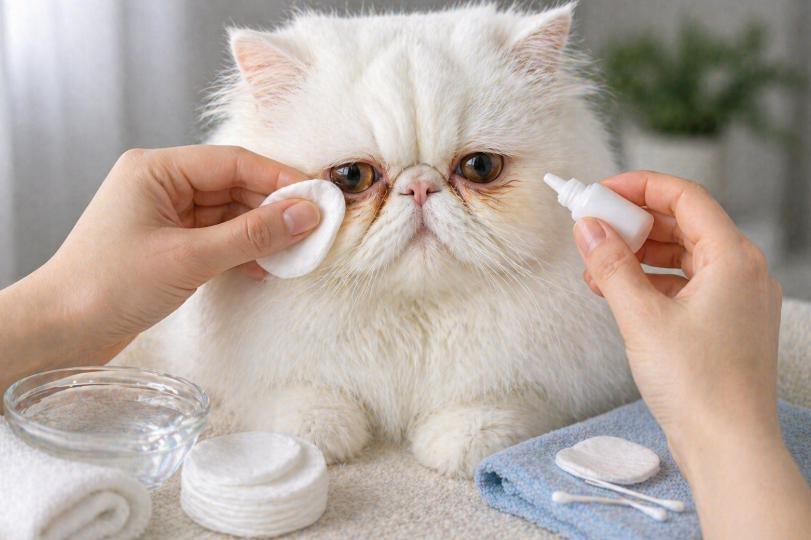
Learning how to handle blocked tear ducts is especially important for Persian cats, as their flat facial structure makes them more prone to tear drainage issues. If you own a Persian cat, you may notice constant tearing, damp fur, or stubborn stains under the eyes. These signs are often linked to blocked or poorly functioning tear ducts.
When you handle blocked tear ducts early, you can prevent irritation and keep your Persian cat more comfortable. While this condition is common in the breed, it still requires consistent care. With the right approach, you can manage symptoms effectively and reduce long-term problems.
Why Persian Cats Commonly Experience Tear Duct Issues
To properly handle blocked tear ducts, it helps to understand why Persian cats are more affected. Their brachycephalic, or flat-faced, structure shortens the tear duct pathway. Because of this, tears do not drain efficiently and instead overflow onto the face.
This constant moisture creates ideal conditions for staining and bacterial growth. Over time, the area may become irritated or inflamed. In some cases, debris or mucus can further block the ducts.
Because this is a structural issue, Persian cats often need ongoing care. Understanding this makes it easier to handle blocked tear ducts with realistic expectations and consistent effort.
Recognizing Early Signs In Persian Cats
If you want to handle blocked tear ducts effectively, recognizing early symptoms is crucial. Persian cats often show visible signs before the condition worsens.
You may notice watery eyes that seem constant throughout the day. Staining under the eyes is also common, especially in lighter-colored coats. Additionally, the fur may appear damp or slightly sticky.
Some Persian cats may rub their face or show mild redness around the eyes. These signs indicate irritation and should not be ignored. Acting early allows you to handle blocked tear ducts before complications develop.
Daily Cleaning Routine For Persian Cats
One of the most important steps when you handle blocked tear ducts is maintaining a daily cleaning routine. Persian cats require more frequent care due to their facial structure.
Use a soft cloth or cotton pad with warm water to gently wipe the area around the eyes. Always clean from the inner corner outward to avoid spreading debris. Afterward, gently dry the fur to reduce moisture buildup.
Because Persian cats have thick facial fur, keeping the area dry is essential. This simple routine helps control symptoms and supports your efforts to handle blocked tear ducts safely.
Using Saline Solution For Gentle Care
Saline solution is a reliable tool when you need to handle blocked tear ducts without causing irritation. It is gentle and suitable for regular use on sensitive areas.
Apply a small amount to a cotton pad and carefully clean around your Persian cat’s eyes. This helps remove debris and maintain hygiene. Avoid direct contact with the eye itself.
Regular use of saline supports a clean environment around the eyes. While it does not remove blockages entirely, it helps manage symptoms effectively.
Warm Compress For Better Tear Flow
A warm compress can support your efforts to handle blocked tear ducts naturally. The warmth may help loosen minor blockages and improve circulation around the tear ducts.
Use a clean cloth soaked in warm water and place it gently over the eye area for a few seconds. Do not apply pressure, as Persian cats have sensitive facial features.
Repeat this process once or twice daily if needed. Combined with cleaning, this method can improve comfort and reduce tearing over time.
Managing Fur Around The Eyes
Because Persian cats have long, dense fur, grooming plays a major role when you handle blocked tear ducts. Hair around the eyes can trap moisture and worsen staining.
Carefully trimming the fur around the eyes helps reduce buildup. This also makes daily cleaning easier and more effective. Always use safe grooming tools designed for pets.
Regular grooming supports hygiene and reduces irritation. It is a simple but essential step for Persian cat care.
Diet And Hydration For Eye Health
Diet can influence how you handle blocked tear ducts in the long term. Poor-quality food may contribute to inflammation or sensitivities that increase tearing.
Choose high-quality ingredients that support overall health. Balanced nutrition helps reduce internal triggers that may affect tear production. Fresh, clean water is also important for proper hydration.
You can learn more about feline health at https://www.petmd.com/.
By improving diet and hydration, you support better results when you handle blocked tear ducts.
Reducing Environmental Irritants
Environmental factors can make tear duct issues worse. Dust, pollen, and strong chemicals may irritate your Persian cat’s eyes and increase tearing.
To handle blocked tear ducts more effectively, keep your home clean and well-ventilated. Regularly wash bedding and vacuum to remove allergens.
Using air purifiers can also help improve air quality. These steps reduce irritation and support overall eye health.
When Veterinary Care Is Necessary
While home care is effective, some cases require professional treatment. If you cannot handle blocked tear ducts successfully at home, consult a veterinarian.
A vet can flush the tear ducts to remove blockages or treat infections if present. In some cases, medication may be needed to reduce inflammation.
Seeking professional help ensures proper diagnosis and prevents complications. This is especially important for persistent or severe cases.
Building A Consistent Care Routine
Consistency is the key to success when you handle blocked tear ducts in Persian cats. A daily routine prevents buildup and keeps symptoms under control.
Include gentle cleaning, grooming, and regular observation in your routine. Keeping everything simple makes it easier to maintain.
You can also explore helpful routines in your internal guides like /cat-grooming-basics and /daily-pet-care-routine.
Over time, a consistent routine improves your cat’s comfort and reduces visible staining.
Conclusion
Learning how to handle blocked tear ducts in Persian cats is essential for maintaining their comfort and health. While their facial structure makes them more prone to this issue, proper care can significantly reduce its impact.
By focusing on daily cleaning, gentle techniques, and a clean environment, you can manage symptoms effectively. Combining these steps with proper nutrition and regular monitoring creates a strong care routine.
With patience and consistency, you can handle blocked tear ducts successfully and keep your Persian cat’s eyes clean, healthy, and comfortable.
FAQ
- Why are Persian cats prone to tear duct problems?
Their flat facial structure prevents proper tear drainage. - Can blocked tear ducts go away on their own?
Mild cases may improve, but consistent care is usually needed. - Is daily eye cleaning necessary for Persian cats?
Yes, daily cleaning helps prevent moisture buildup and staining. - Are warm compresses safe for Persian cats?
Yes, when used gently, they can support tear flow and comfort. - When should I visit a vet for tear duct issues?
If symptoms persist or worsen despite care, seek professional help.

