
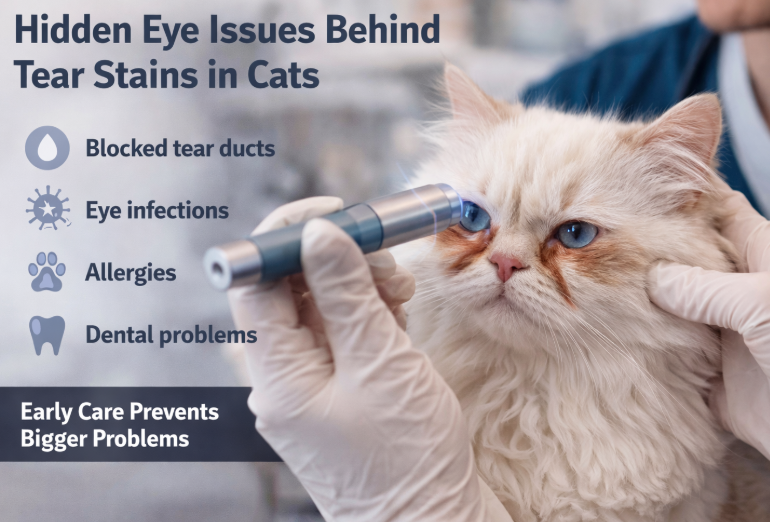
Tear stains are often seen as a simple cosmetic issue, especially in light-colored cats, but they can signal something more serious beneath the surface. Many cat owners do not realize that hidden eye issues tear stains can reveal deeper health concerns that require attention. While some staining is harmless, persistent or worsening marks under your cat’s eyes may point to underlying problems that go beyond grooming. Understanding hidden eye issues tear stains helps you take better care of your cat’s health and prevent more serious complications.
At first glance, tear stains may look like a minor inconvenience. However, when they appear frequently or change in color and texture, they often indicate irritation or dysfunction in the eye area. Because cats are sensitive and often hide discomfort, tear stains may be one of the earliest visible signs of trouble. Learning how hidden eye issues tear stains connect to your cat’s health allows you to respond early and keep your pet comfortable.
When Tear Stains Signal More Than Grooming Needs
Not all tear stains are equal. While occasional staining can result from normal tear production, ongoing discoloration may reflect deeper issues. One of the most common hidden eye issues tear stains reveal is excessive tearing, also known as epiphora. When tears overflow consistently, they create a moist environment that leads to staining and bacterial growth.
However, excessive tearing rarely occurs without a reason. In many cases, it is a response to irritation, blockage, or infection. This is why it is important to look beyond surface cleaning and understand what is causing the problem. Recognizing hidden eye issues tear stains early helps prevent long-term damage and discomfort for your cat.
Changes in stain color can also provide clues. Darker stains may indicate yeast or bacterial buildup, while lighter stains could point to mild irritation. Paying attention to these details gives you insight into your cat’s condition and helps guide your next steps.
Blocked Tear Ducts And Drainage Problems
One of the most common hidden eye issues tear stains are linked to is blocked or poorly functioning tear ducts. In a healthy cat, tears drain through small ducts located near the eyes. When these ducts become blocked, tears cannot flow properly and instead spill onto the fur.
This overflow leads to constant moisture, which causes staining over time. Certain breeds, especially flat-faced cats like Persians, are more prone to this issue due to their facial structure. Their shorter tear ducts make drainage less efficient, increasing the likelihood of stains.
While mild blockage may not cause immediate discomfort, it can lead to infection if left untreated. Therefore, understanding how hidden eye issues tear stains relate to tear duct problems is essential for long-term care. A veterinarian can assess whether drainage issues are present and recommend appropriate treatment.
Eye Infections And Inflammation
Infections are another serious factor behind hidden eye issues tear stains. Bacterial or viral infections can irritate the eyes, leading to increased tear production. This excess moisture contributes to staining and may also cause redness or swelling.
Cats with eye infections often show additional symptoms, such as squinting or discharge. These signs should not be ignored, as untreated infections can worsen quickly. Identifying hidden eye issues tear stains caused by infections allows you to seek treatment before complications develop.
Inflammation may also result from allergies or irritants. When the eyes become inflamed, they produce more tears as a protective response. This cycle can lead to persistent staining if the underlying cause is not addressed.
Allergies And Environmental Triggers
Environmental factors can play a significant role in hidden eye issues tear stains. Dust, pollen, smoke, and even household cleaning products can irritate your cat’s eyes. When exposed to these irritants, the eyes produce more tears to flush them out.
Over time, this leads to noticeable staining, especially if exposure is constant. Cats with allergies may also show signs such as itching or watery eyes. Recognizing these triggers helps you reduce exposure and improve your cat’s comfort.
Maintaining a clean and well-ventilated environment can make a difference. Simple changes, such as reducing dust and using pet-safe products, support your efforts to manage hidden eye issues tear stains effectively.
Dental Problems And Eye Health Connection
It may seem surprising, but dental issues can also contribute to hidden eye issues tear stains. The roots of certain teeth are located close to the tear ducts. When infections develop in these areas, they can affect tear drainage.
This connection means that dental problems may lead to excessive tearing and staining. Cats with dental issues might also show signs such as difficulty eating or bad breath. Addressing oral health is therefore an important part of managing tear stains.
Regular dental checkups help prevent these complications. By understanding the link between oral health and hidden eye issues tear stains, you can take a more comprehensive approach to your cat’s care.
When To Seek Veterinary Help
While some tear stains can be managed at home, others require professional attention. If you notice persistent staining, unusual discharge, or signs of discomfort, it is important to consult a veterinarian. Early diagnosis ensures that underlying issues are treated effectively.
A veterinarian can perform tests to identify the cause of excessive tearing. This may include checking for blockages, infections, or structural abnormalities. Addressing hidden eye issues tear stains with professional guidance helps prevent long-term damage.
Ignoring these signs can lead to more serious conditions, including chronic infections or vision problems. Therefore, seeking help when needed is essential for your cat’s well-being.
Daily Care To Support Eye Health
While medical issues may require treatment, daily care plays a crucial role in prevention. Gently cleaning your cat’s face helps remove moisture and reduce bacterial growth. Using a soft cloth or pet-safe wipe keeps the area clean without causing irritation.
Regular grooming also helps prevent buildup around the eyes. Keeping the fur trimmed reduces moisture retention and minimizes staining. These simple habits support your efforts to manage hidden eye issues tear stains.
Consistency is key. A daily routine ensures that small problems are addressed before they become serious. Over time, this approach leads to healthier eyes and a cleaner appearance.
Understanding The Bigger Picture
Tear stains are often the result of multiple factors working together. For example, a cat with mild allergies and poor tear drainage may experience more noticeable staining. Because of this, focusing on a single solution may not be enough.
Taking a holistic approach allows you to address the problem from different angles. Improving diet, maintaining hygiene, and reducing environmental irritants all contribute to better results. Understanding how hidden eye issues tear stains fit into the bigger picture helps you create a balanced care plan.
By observing your cat closely and making small adjustments, you can significantly improve their comfort and appearance.
Conclusion
Tear stains in cats are more than just a cosmetic concern. They often reflect hidden issues that affect your pet’s health and comfort. By understanding hidden eye issues tear stains, you can identify potential problems early and take the right steps to address them.
Whether the cause is blocked tear ducts, infections, allergies, or even dental issues, each factor requires attention. A combination of proper care, environmental adjustments, and professional guidance ensures the best outcome for your cat.
With consistent effort and awareness, you can reduce tear stains while supporting your cat’s overall well-being. Paying attention to these small details makes a lasting difference in your pet’s health and happiness.
FAQ
1. Are tear stains always a sign of a health problem in cats?
Not always, but persistent or worsening stains may indicate underlying issues that need attention.
2. Can eye infections cause staining in cats?
Yes, infections often increase tear production and lead to noticeable discoloration under the eyes.
3. How can I tell if my cat has blocked tear ducts?
Common signs include constant tearing, wet fur under the eyes, and recurring stains.
4. Do allergies affect a cat’s eye health?
Yes, allergens can irritate the eyes and increase tear production, leading to staining.
5. What is the best way to manage tear stains daily?
Gentle cleaning and regular grooming help reduce buildup and maintain healthy eyes.

