
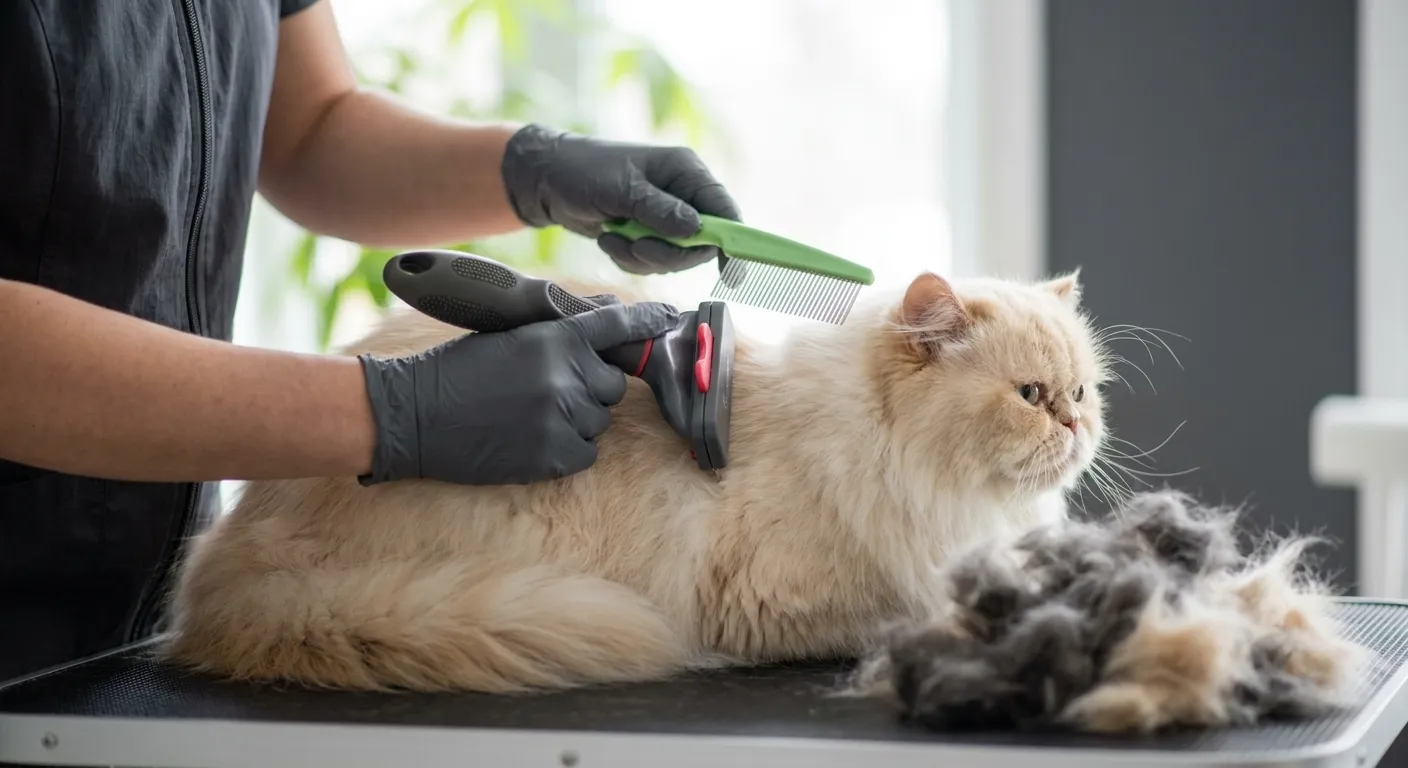
Persian cats, with their iconic luxurious double coats, are undeniably beautiful. However, this magnificent fur comes with a unique set of grooming challenges, most notably prolific shedding. For owners and aspiring groomers, understanding advanced Persian cat de-shedding techniques is not just about aesthetics; it is a critical component of their overall health and comfort. Generic cat grooming advice often falls short when addressing the specific needs of a Persian’s dense undercoat and delicate topcoat. Here at Persian Grooming Pro, we delve deep into specialized, in-depth education to empower you to master this essential aspect of care.
The Imperative of De-Shedding for Persian Wellness
The sheer volume of hair a Persian cat sheds can be astounding. Their double coat consists of a long, silky outer layer and a dense, woolly undercoat. When this undercoat is not properly managed, it can quickly lead to matting, skin irritation, and even painful hairballs. Therefore, de-shedding goes far beyond simply removing loose hair; it is a crucial practice that contributes significantly to your Persian’s wellness. This aligns perfectly with the current industry trend of “Wellness-Focused Grooming” or “Skinification,” where the focus shifts from purely aesthetic grooming to holistic routines that prioritize skin comfort, coat health, and circulation. Regular, effective de-shedding prevents the accumulation of dead hair, allowing the skin to breathe, reducing the risk of dermatitis, and promoting healthy blood flow. It also minimizes the ingestion of hair during self-grooming, a common cause of digestive upset.
Essential Tools for Effective Persian Cat De-Shedding Techniques
To truly master de-shedding, you need more than just a standard brush. Investing in the right tools is paramount. The market for pet grooming products is robust, valued at USD 15.6 billion in 2025, reflecting a growing consumer willingness to invest in specialized care. For effective Persian cat de-shedding techniques, consider these expert-recommended tools:
- Specialized De-shedding Rakes: These tools are designed with specific blade patterns to penetrate the topcoat and gently pull out loose undercoat without cutting the healthy guard hairs. Look for models with rotating teeth to prevent snagging.
- Wide-Toothed Combs: Essential for initial detangling before de-shedding, ensuring no mats are present that could cause pain when using a rake.
- Slicker Brushes: While not primarily for de-shedding, a good slicker brush with fine, bent wires can help remove surface loose hair and smooth the topcoat after the deeper de-shedding process.
- Professional High-Velocity Dryers: These are invaluable. After a bath, a high-velocity dryer can effectively blast out a significant amount of loose undercoat, dramatically reducing shedding. Always use on a low-heat setting and keep the nozzle moving to avoid skin irritation.
Pre-Grooming Preparation: Setting the Stage for Success
Before you even pick up a de-shedding tool, proper preparation is key. A calm environment is crucial for both you and your cat. Firstly, ensure your Persian is relaxed. You might consider a short play session beforehand to expend some energy. Secondly, gather all your tools within reach. This prevents interruptions during the grooming process. Moreover, a well-lit area is essential so you can clearly see the coat and identify any problem areas. Finally, always inspect your cat’s coat for any mats or tangles before beginning. Attempting to de-shed a matted coat can be painful and counterproductive. Gently work through any minor tangles with a wide-toothed comb first. For severe mats, professional intervention might be necessary.
The Bathing Ritual: A Foundation for Advanced De-Shedding
A thorough bath is often the first step in advanced Persian coat maintenance. Warm water helps to loosen dead hair and skin. Choose a shampoo specifically formulated for long-haired cats, ideally one with de-shedding properties. Apply the shampoo gently, working it into the coat without scrubbing vigorously, which can cause tangles. Rinse thoroughly, ensuring no residue remains, as this can irritate the skin. Consequently, conditioning is equally important. A good conditioner will help to detangle the fur and moisturize the skin, making the subsequent de-shedding process much easier. After rinsing, gently squeeze excess water from the coat. Do not rub with a towel, as this can create knots. Instead, blot the fur dry.
Mastering the High-Velocity Dryer: A De-Shedding Game Changer
The high-velocity dryer is perhaps the most underutilized tool for managing a Persian’s undercoat. After bathing, this dryer can significantly reduce shedding. Start by towel-drying your cat as much as possible. Then, introduce the dryer slowly, allowing your cat to get used to the sound and sensation. Begin on a low setting, keeping the nozzle moving constantly to prevent skin burns. The powerful airflow blasts loose hair out of the coat. This method is far more effective than brushing alone for removing large quantities of shedding fur. Furthermore, it helps to straighten the coat, making it easier to comb through later. For best results, work in sections, lifting the coat to direct the air to the roots. Remember, patience is vital when introducing new grooming equipment.
Strategic Brushing and Combing for Optimal Hair Removal
Once your Persian is dry, it is time for the core de-shedding work. Start with a wide-toothed comb to gently work through the entire coat, checking for any remaining tangles. This ensures a smooth surface for the de-shedding rake. Next, introduce the specialized de-shedding rake. Work in small sections, always brushing in the direction of hair growth. Use gentle, even strokes. The goal is to lift and remove the loose undercoat without pulling on the skin or cutting healthy fur. You will be surprised by the amount of hair that comes out! Regularly clean the rake to maintain its effectiveness. After using the rake, follow up with a slicker brush to smooth the topcoat and remove any remaining surface loose hairs. This comprehensive approach is central to effective Persian cat de-shedding techniques.
Addressing Specific Problem Areas
Certain areas on a Persian cat are prone to more matting and shedding. For instance, the armpits, behind the ears, and the
Further reading: More from Persian Grooming Pro

