
You lift your Persian’s chin for a scratch and notice something odd: tiny black specks in the fur, like someone sprinkled pepper there. It could be food, or it could be chin acne. In a long, fluffy coat, it is easy to miss until it gets worse. The good news is that most mild cases of Persian cat chin acne are manageable with gentle home care and some help from your vet.
This guide explains what chin acne is, what may contribute to it, how to keep the chin clean safely, and the signs that mean it is time for a vet visit.
Not veterinary advice: This content is not a substitute for professional veterinary advice, diagnosis or treatment. Always consult your veterinarian about your own cat.
What is chin acne in cats?
VCA Animal Hospitals describes feline chin acne as a poorly understood disorder where the skin produces too much keratin, a protein found in hair and skin. When that excess keratin gets trapped in hair follicles, blackheads (comedones) form. If bacteria get in, those blackheads can become pimples, and in more severe cases the follicles can become inflamed, infected or even rupture, causing larger, painful sores.
VCA notes that the most common sign is simply a dirty-looking chin. The blackheads may appear on the chin, lower lip or upper lip. In chronic cases, the chin can become swollen and crusty.
Is it acne, food or something else?
Black specks on a chin are not always acne. A few quick checks help you tell what you are looking at before you call your vet:
- Food debris usually wipes away easily with a damp cloth and sits on the fur rather than in the skin.
- Chin acne blackheads sit at the base of the hairs, in the skin, and do not wipe off.
- Flea dirt can collect around the head and neck too. If specks turn reddish-brown on damp white paper, they may be flea dirt. Our guide to checking a Persian for fleas explains the test.
If you are not sure, a quick photo to show your vet is useful.
What may contribute to it
The exact cause is not known. VCA lists several factors that may play a role, including excess oil production in the skin, stress, viral infection, a weakened immune system, allergies and poor grooming habits, while noting that none of these has been proven to be the cause. VCA also mentions a possible link with plastic food and water dishes, because scratches in plastic can harbour bacteria.
Why Persians may need extra help
There is no strong evidence that Persians get chin acne more than other cats. But a few breed traits can make the chin harder to keep clean:
- A flat face. A Persian’s chin often sits close to the food when eating, so food and moisture can end up on the fur.
- Long fur under the chin. Long hair holds on to food, oil and debris, and hides early blackheads.
- Grooming limits. Cats cannot lick their own chin, so they rely on paw-washing. A flat face may make that less effective.
So even if the breed is not more prone, Persian owners often need to do a little more to keep the chin clean.
How to clean a Persian’s chin gently
For mild blackheads, and once your vet has confirmed it is chin acne, a gentle daily routine may help. Always check with your vet before you start, especially if the area looks sore.
- Use lukewarm water. Dampen a soft cloth or cotton pad with plain lukewarm water. Avoid human acne products, which can irritate cat skin and may contain ingredients that are unsafe for cats.
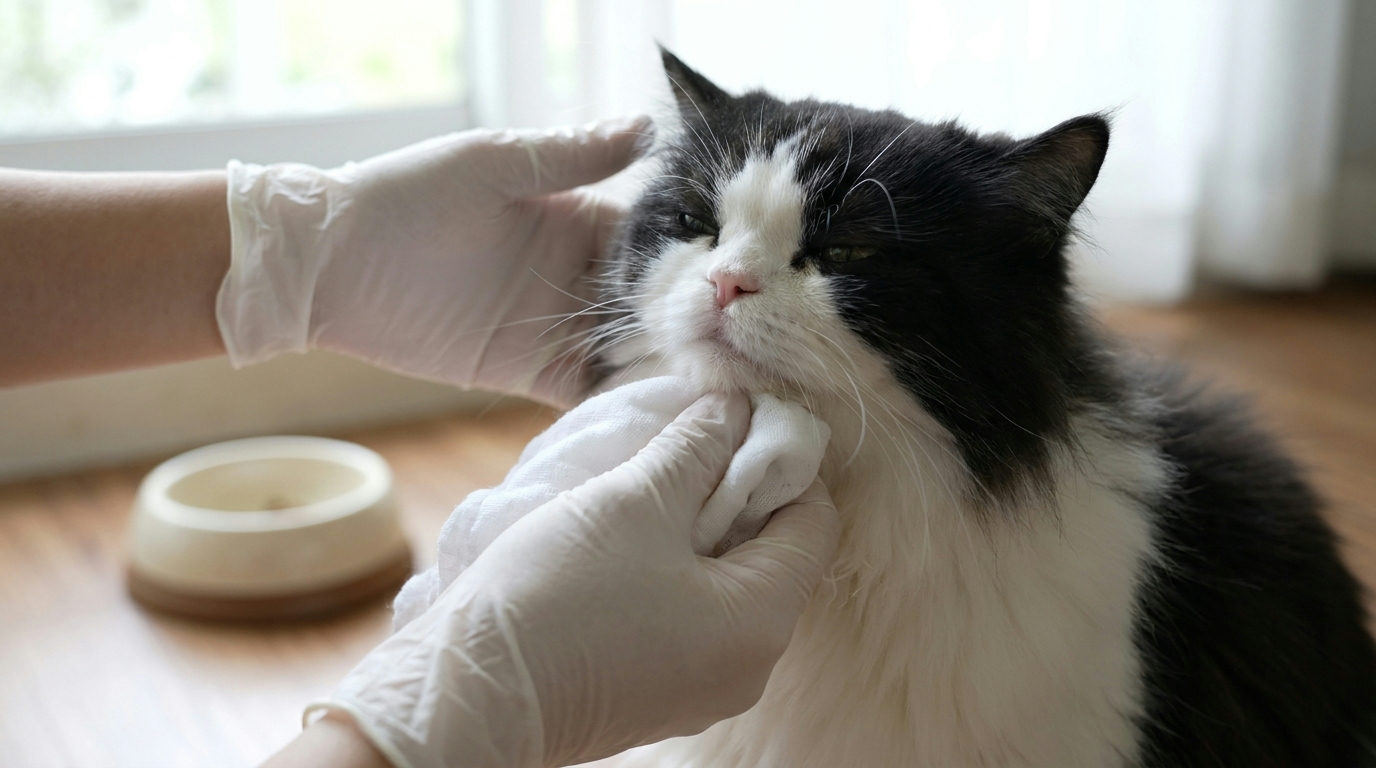
- Wipe gently. Hold your cat’s head lightly and wipe the chin in the direction of the fur, from the lip downwards. Do not scrub.
- Pat dry. Leaving the chin damp can make things worse. Pat it dry with a clean, soft towel.
- Comb lightly. A fine comb can lift away loose debris. Stop if your cat flinches.
- Do not squeeze. Squeezing blackheads or pimples can push infection deeper and cause pain.
If your vet recommends a specific wash or treatment, follow their instructions for how often and how long to use it.
After-meal wipes
Since food and moisture collect on a Persian’s chin while eating, a quick wipe after meals is one of the most useful habits you can build. It takes seconds, and it also helps keep the rest of the face clean. Our daily face routine fits well alongside this.
Changes around the home that may help
- Switch to ceramic, glass or stainless steel bowls. These are easier to keep clean than scratched plastic.
- Wash bowls daily in hot, soapy water, and rinse well.
- Choose wide, shallow bowls. They let a flat-faced cat eat without pressing the chin into the food.
- Keep bedding clean, especially the spot where your cat rests its head.
- Keep the chin fur tidy. A small trim of very long chin fur may make cleaning easier. Ask your groomer if you are not confident doing it.
Some pages on this site contain affiliate links; this article does not.
When to see your vet
Chin acne can look like other skin problems, including infections, mites, fungal conditions and allergies. VCA notes that diagnosis is usually based on history and appearance, but tests such as skin cytology or cultures may sometimes be needed. See your vet if you notice:
- Red, swollen or hot skin on the chin or lips
- Pimples, pus, bleeding or crusts
- Hair loss on the chin
- Your cat scratching or rubbing its chin a lot
- Your cat avoiding being touched on the face, or seeming in pain
- No improvement after a couple of weeks of gentle cleaning
- It keeps coming back
Your vet can confirm what is going on and recommend a treatment plan. Do not use leftover medicines, human creams or home remedies without advice.
Common questions
Is chin acne contagious?
Chin acne itself is not generally considered contagious. But some conditions that look like it, such as ringworm, can spread between pets and to people. That is one more reason to have your vet check it.
Will it go away on its own?
Some mild cases improve with better hygiene. Others come and go throughout a cat’s life and need ongoing management. Your vet can help you work out a routine.
Can diet affect chin acne?
Possibly. Allergies are one of the factors VCA lists. If your vet suspects a food allergy, they may suggest a diet trial. Do not change your cat’s diet drastically without talking to them first.
Chin care checklist
- Check the chin weekly during grooming.
- Wipe after meals with a soft, damp cloth, then pat dry.
- Use ceramic, glass or stainless steel bowls, washed daily.
- Never squeeze spots or use human acne products.
- See your vet for redness, swelling, pus, hair loss or pain.
Persian cat chin acne is common, usually mild and often manageable. A clean chin, clean bowls and a vet check when things look sore will keep most cats comfortable.
Not veterinary advice: this article is general guidance and is not a substitute for professional veterinary advice. Consult your veterinarian about your own cat.

