
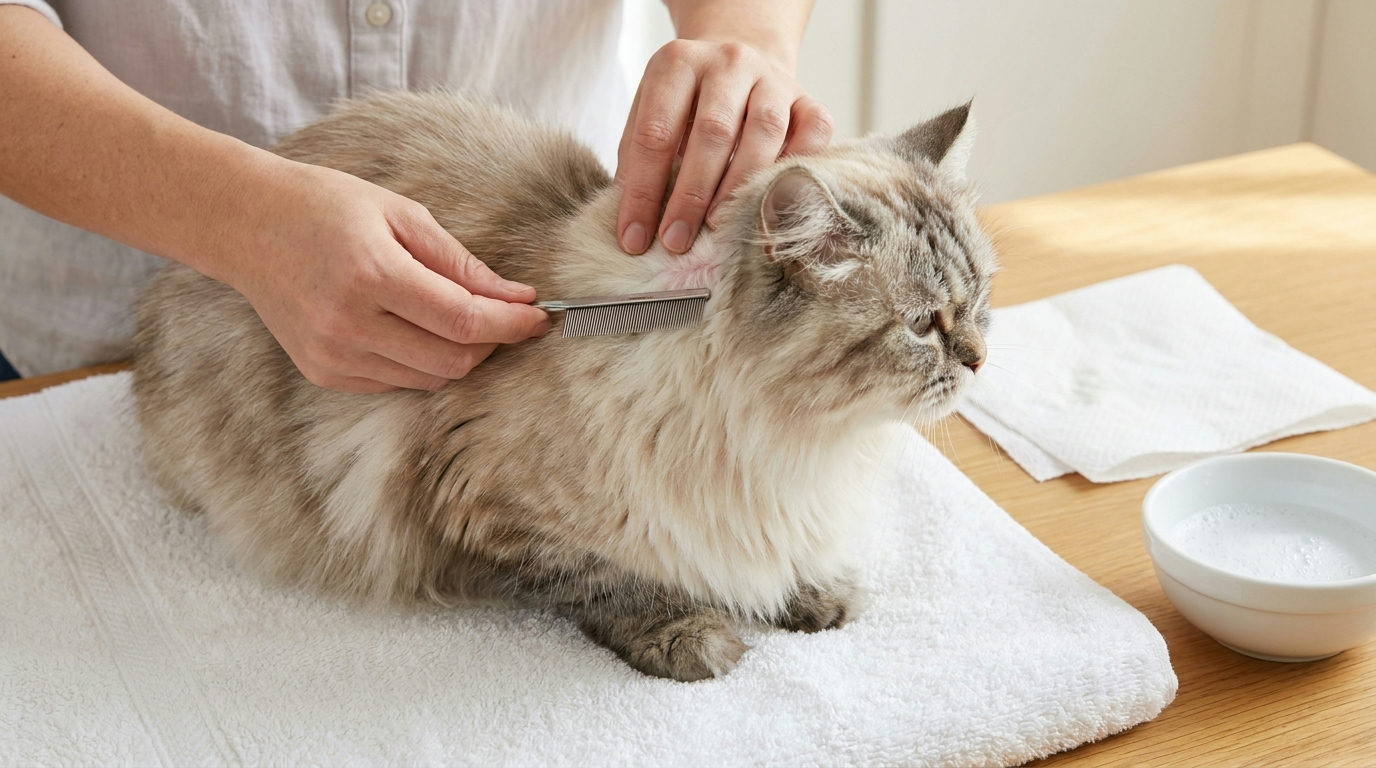
On a short-haired cat, fleas are often easy to spot. On a Persian, they can hide for weeks in a thick, fluffy coat before you notice anything is wrong. Knowing how to check a Persian cat for fleas, and doing it regularly, means you catch a problem early, before it spreads through the house or makes your cat miserable.
This guide explains the signs to watch for, how to use a flea comb through a long coat, how to tell flea dirt from ordinary dirt, and what to do next if you find something.
Not veterinary advice: This content is not a substitute for professional veterinary advice, diagnosis or treatment. Always consult your veterinarian about your own cat.
Why fleas are a bigger deal than they look
The Cornell Feline Health Center describes fleas as the most common external parasite of cats. Beyond the itch, flea bites can lead to skin damage from scratching, and fleas can carry tapeworms and the bacteria behind cat scratch disease in people. Cornell also notes that heavy flea burdens can cause anaemia in kittens.
For Persians there is an extra problem: the coat. Long, dense fur gives fleas plenty of places to hide, and scratching or over-grooming a long coat can quickly lead to mats. Itchy cats also groom more, which can mean more hairballs.
Indoor cats are not immune. Fleas can come in on other pets, on people’s clothes or shoes, or from visiting animals.
Signs your Persian might have fleas
- Scratching, especially around the neck, ears and base of the tail
- Over-grooming, licking or chewing at one area
- Sudden twitching of the skin along the back
- Small scabs or crusty bumps you can feel when you stroke your cat
- Thinning fur or bare patches, often on the lower back or belly
- Black specks in the coat or on your cat’s bedding
- Restlessness or trouble settling
Some cats show very few signs, so a regular comb check is worth doing even if your cat seems fine.
What you’ll need
- A flea comb, which has very fine, closely spaced teeth.
- A wide-toothed comb to loosen the coat first.
- A white paper towel or a sheet of white paper.
- A small bowl of water with a drop of washing-up liquid.
- Good light, and treats.
Some pages on this site contain affiliate links; this article does not.
How to check a Persian cat for fleas, step by step
1. Loosen the coat first
A flea comb will snag in a long, dense coat if you go straight in. Start with a wide-toothed comb over the areas you plan to check, so the fine comb can reach the skin.
2. Focus on the hot spots
Fleas prefer warm, protected places. Check:
- The back of the neck and behind the ears
- Along the spine, especially near the base of the tail
- The belly and groin, where the fur is thinner
- The armpits
3. Part the fur and look
Part the fur with your fingers so you can see the skin. Cornell’s integrated pest management guide suggests combing against the grain, towards the head, to help spot fleas hiding in the fur. Look for small, dark brown insects that move quickly, and for tiny black specks on the skin.
4. Use the flea comb
Run the flea comb through short sections of fur, close to the skin. After each stroke, check the teeth. Fleas and flea dirt get trapped between the fine teeth. Dip the comb in the soapy water to drown any fleas you catch, then wipe it clean on the paper towel.
5. Do the wet paper test
Flea dirt is flea droppings, made mostly of digested blood. Cornell’s guide describes it as black flecks in the fur or where the animal sleeps. To tell it apart from ordinary dirt, tap the specks onto damp white paper towel. Flea dirt will dissolve into reddish-brown smudges. Normal dirt will stay dark.
6. Check the bedding
Look at your cat’s favourite sleeping spots for black specks or tiny white eggs. A salt-and-pepper look on bedding is a strong sign of fleas.
How often to check
A quick flea comb check once a week, as part of your normal grooming routine, is a good habit. Check more often in warm months, after your cat has been around other animals, or if you notice scratching. It only takes a few minutes once your cat is used to it.
What to do if you find fleas
Finding a flea or two is common and fixable. The key is to act on the whole household, not just the cat you found them on.
- Talk to your vet about treatment. Cornell’s guide notes that over-the-counter flea products are not as effective as those prescribed by a veterinarian. Your vet can recommend a product that suits your cat’s age, weight and health.
- Never use dog flea products on a cat. Some products made for dogs contain ingredients that are toxic to cats. Always check the label and ask your vet if unsure.
- Treat every pet in the house, even those that seem unaffected, as your vet advises.
- Wash bedding on a hot cycle and vacuum floors, furniture and car seats thoroughly. Empty the vacuum outside.
- Keep flea combing. Cornell’s guide notes that a flea comb can help reduce adult fleas and flea dirt in the fur. It will not solve an infestation on its own, but it helps and lets you track progress.
- Ask about worming. Because fleas can carry tapeworm, your vet may recommend treating for worms too.
When to see your vet promptly
- Your cat is scratching so much the skin is broken, red or oozing.
- You see large bare patches or scabs across the body.
- A kitten has fleas, especially if pale, weak or not eating well.
- You see small rice-like segments around your cat’s rear or in the bedding, which can be tapeworm.
- Flea treatment does not seem to be working after the time your vet suggested.
Keeping fleas away
Prevention is easier than dealing with an infestation. Ask your vet about ongoing flea prevention suited to your cat, and keep to the schedule they recommend, even in cooler months when fleas seem less likely. Keep up regular grooming, since a well-combed coat is easier to check and less appealing to parasites. And keep an eye on anything that comes into the house with fur, from a visiting dog to a new cat.
Weekly flea check routine
- Loosen the coat with a wide-toothed comb.
- Flea comb the neck, ears, spine, tail base, belly and armpits.
- Check the comb after every stroke and dip it in soapy water.
- Do the wet paper test on any black specks.
- Check bedding for specks or eggs.
- Call your vet if you find fleas, for a treatment plan.
A long coat makes fleas harder to spot, but not impossible. Once you know how to check a Persian cat for fleas, a few minutes a week is enough to keep your cat comfortable and your home flea-free.
Not veterinary advice: this article is general guidance and is not a substitute for professional veterinary advice. Consult your veterinarian about your own cat.

