
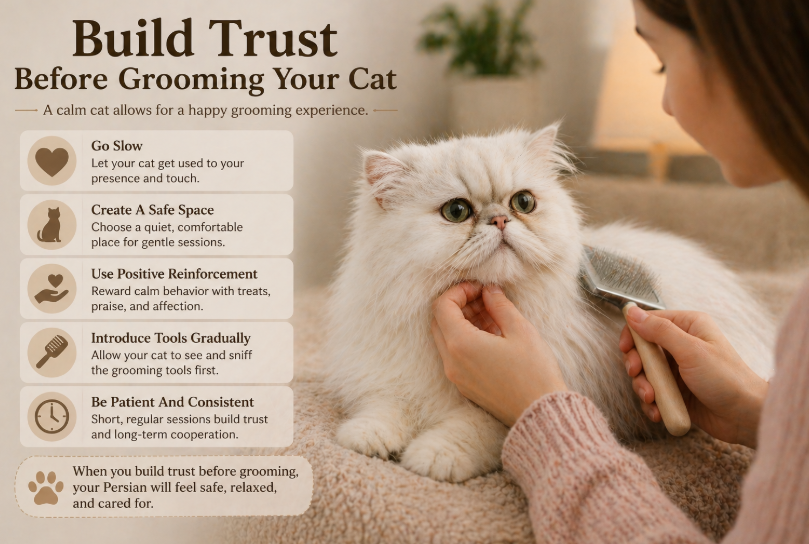
Grooming can be a stressful experience for many cats, especially if they are not used to being handled regularly. That is why it is essential to build trust before grooming your cat, rather than jumping straight into brushing or cleaning. When a cat feels safe, relaxed, and understood, grooming becomes far easier and more effective. Instead of resistance or fear, you create a calm routine that benefits both you and your pet.
Many owners struggle because they focus only on the grooming itself, not the emotional state of the cat. However, when you build trust before grooming, you address the root of the problem. A relaxed cat is more cooperative, which leads to better grooming results and a stronger bond between you and your pet.
Why Trust Matters More Than Technique
Before you focus on tools or techniques, it is important to understand why you must build trust before grooming. Cats are naturally cautious animals, and they often react negatively to anything unfamiliar. Grooming tools, sudden touch, or restraint can trigger fear if trust has not been established first.
When a cat feels threatened, it may try to escape, scratch, or hide. This reaction is not aggression but self-protection. Therefore, building trust reduces these defensive behaviors. As a result, grooming becomes smoother and less stressful.
Additionally, trust allows your cat to associate grooming with comfort rather than discomfort. Over time, this positive association changes how your cat reacts to grooming sessions. Instead of resisting, your cat begins to accept and even enjoy the experience.
Understanding Your Cat’s Behavior First
To build trust before grooming, you need to understand your cat’s behavior and personality. Every cat is different, and their comfort levels vary based on past experiences and temperament. Some cats enjoy being touched, while others prefer minimal handling.
Observe how your cat reacts to touch in different areas. Pay attention to body language, such as tail movement, ear position, and eye expression. These signals tell you whether your cat feels relaxed or uncomfortable.
Once you understand these cues, you can adjust your approach. This awareness helps you avoid pushing your cat too far, which is essential when trying to build trust before grooming. Instead, you move at a pace that feels safe for your pet.
Creating A Calm And Familiar Environment
Environment plays a major role when you want to build trust before grooming. A noisy or unfamiliar space can increase anxiety and make your cat more resistant. Therefore, choose a quiet and comfortable area where your cat already feels secure.
Timing also matters. Try grooming when your cat is naturally relaxed, such as after eating or resting. At this point, your cat is less likely to react negatively. Additionally, keeping the environment consistent helps your cat feel more in control.
Soft lighting, minimal noise, and a calm atmosphere all contribute to building trust. When your cat feels safe in its surroundings, it becomes easier to introduce grooming gradually.
Starting With Gentle Interaction
The first step to build trust before grooming is simple interaction. Instead of starting with a brush, begin with gentle petting. Focus on areas your cat already enjoys, such as the head or back.
This approach helps your cat associate your touch with comfort. Over time, you can slowly introduce new areas and longer contact. The key is to move gradually and stop before your cat becomes uncomfortable.
Short sessions are more effective than long ones. Even a few minutes of calm interaction builds confidence. When repeated consistently, these sessions create a strong foundation for grooming.
Introducing Grooming Tools Slowly
Once your cat feels comfortable with your touch, the next step is to introduce grooming tools. To build trust before grooming, do not use the tool immediately. Instead, let your cat see and sniff it first.
Place the brush near your cat and allow curiosity to take over. This reduces fear and makes the tool feel less threatening. After that, gently touch your cat with the tool without brushing. This step helps your cat adjust to the sensation.
When your cat remains calm, begin with light strokes. Keep the movements slow and gentle. Gradually increase the duration as your cat becomes more comfortable. This step-by-step approach ensures you build trust before grooming fully.
Using Positive Reinforcement Effectively
Positive reinforcement is essential when you want to build trust before grooming. Reward your cat for calm behavior using treats, praise, or gentle affection. These rewards create a positive connection with grooming.
Timing is important. Give rewards immediately after a calm response so your cat understands the connection. Over time, your cat begins to associate grooming with something enjoyable.
Avoid forcing your cat or using punishment. These actions can damage trust and make grooming more difficult. Instead, focus on rewarding progress, no matter how small. This approach encourages cooperation and builds confidence.
Recognizing Stress Signals Early
To successfully build trust before grooming, you must recognize when your cat feels stressed. Common signs include flattened ears, twitching tails, and attempts to move away. These signals indicate that your cat needs a break.
Stopping early is better than pushing too far. When you respect your cat’s limits, you reinforce trust. As a result, your cat becomes more willing to participate in future sessions.
Over time, you will learn your cat’s unique signals. This understanding allows you to adjust your approach and maintain a calm grooming routine.
Building A Consistent Routine Over Time
Consistency is key when trying to build trust before grooming. Regular sessions help your cat become familiar with the process. Even short daily interactions can make a significant difference.
A predictable routine reduces anxiety because your cat knows what to expect. This sense of control makes grooming feel less threatening. As a result, your cat becomes more relaxed during each session.
In addition, consistency helps reinforce positive associations. The more often your cat experiences calm grooming, the more confident it becomes. This gradual progress leads to long-term success.
Handling Difficult Situations With Patience
Some cats may take longer to trust, especially if they have had negative experiences in the past. In these cases, patience is essential. Rushing the process can undo your progress and increase fear.
Break grooming into smaller steps and focus on building comfort first. Even if progress seems slow, each positive interaction helps. Over time, your cat will become more accepting.
If needed, take breaks and return later. This flexible approach allows you to build trust before grooming without overwhelming your cat. Patience ensures that trust develops naturally and lasts longer.
When Professional Help Is Needed
Sometimes, despite your best efforts, it may be difficult to build trust before grooming on your own. In these situations, professional groomers or veterinarians can help. They have experience handling nervous or sensitive cats safely.
Professional guidance can also teach you techniques to use at home. This support makes it easier to continue building trust with your cat. Combining expert advice with your routine often leads to better results.
Seeking help is not a failure. Instead, it ensures your cat receives proper care while you continue strengthening your bond.
Conclusion
Learning how to build trust before grooming your cat is one of the most important steps in creating a stress-free grooming routine. Instead of forcing the process, you focus on comfort, patience, and understanding. This approach not only improves grooming results but also strengthens your relationship with your pet.
By creating a calm environment, using gentle interaction, and rewarding positive behavior, you make grooming a safe and familiar experience. While progress may take time, consistency leads to lasting results. In the end, a trusting cat is a cooperative cat, making grooming easier and more enjoyable for both of you.
FAQ
1. Why is trust important before grooming a cat?
Trust helps your cat feel safe, which reduces stress and makes grooming sessions more manageable.
2. How long does it take to build trust with a cat?
It varies, but consistent, gentle interaction over days or weeks usually shows progress.
3. What if my cat refuses grooming completely?
Start with basic interaction and gradually introduce grooming tools without forcing the process.
4. Can treats help during grooming sessions?
Yes, treats are effective for reinforcing calm behavior and creating positive associations.
5. When should I seek professional help?
If your cat shows extreme fear or aggression, a professional can provide safe handling and guidance.

