
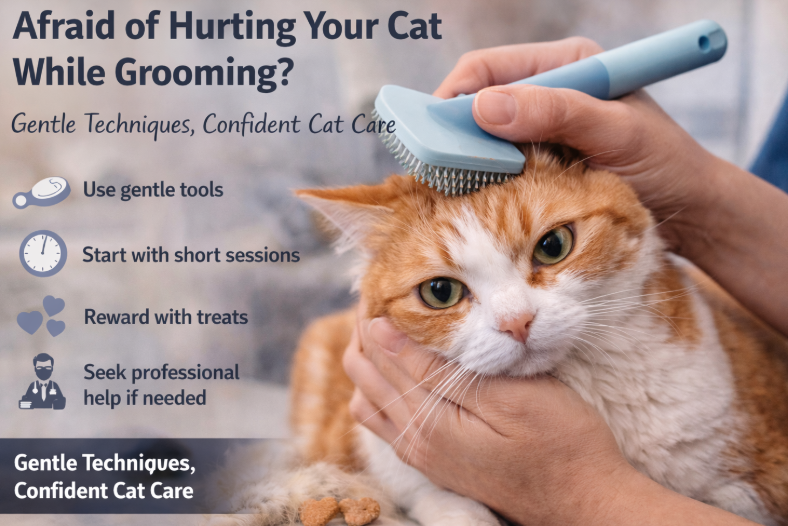
If you feel afraid of hurting your cat during grooming, you are not alone. Many cat owners hesitate to brush, clean, or trim their cat’s fur because they worry about causing pain or stress. While this concern comes from a good place, it can sometimes lead to avoiding grooming altogether. However, understanding why you feel afraid of hurting your cat and learning the right techniques can transform grooming into a safe and calm experience for both of you.
At first, grooming may seem risky, especially when your cat resists or reacts unpredictably. Cats are sensitive animals, and their body language can be hard to read if you are not familiar with it. Because of this, many owners become overly cautious. Yet, avoiding grooming can lead to bigger problems like matting, dirt buildup, and discomfort. Learning how to overcome being afraid of hurting your cat allows you to provide proper care while building trust.
Why Grooming Feels Risky For Many Owners
One of the main reasons people feel afraid of hurting your cat is uncertainty. Without knowing how much pressure to apply or which tools to use, it is easy to worry about making a mistake. Cats also have delicate skin, which can make grooming feel intimidating.
Additionally, cats often react quickly when something feels uncomfortable. A sudden movement, scratch, or attempt to escape can make you feel like you are doing something wrong. As a result, you may stop grooming altogether. However, these reactions are often normal and not necessarily a sign of harm.
Understanding your cat’s behavior helps reduce fear. When you recognize signs of stress versus signs of pain, you can respond appropriately. This awareness is key to overcoming the feeling of being afraid of hurting your cat.
Understanding Your Cat’s Sensitivity
Cats have highly sensitive skin, especially in areas like the belly, legs, and face. Because of this, using the wrong tools or applying too much pressure can cause discomfort. This sensitivity is a major reason why many owners feel afraid of hurting your cat.
However, sensitivity does not mean grooming should be avoided. Instead, it means you need to adjust your approach. Using soft brushes and gentle strokes helps prevent irritation. Starting with less sensitive areas, such as the back, can also make your cat more comfortable.
It is also important to watch your cat’s reactions. If your cat becomes tense or tries to move away, it may be time to pause. Learning to read these signals helps you groom safely and reduces your fear.
Choosing The Right Grooming Tools
Using the correct tools makes a big difference in how safe grooming feels. One reason people remain afraid of hurting your cat is using tools that are not suitable for their cat’s coat type. For example, a brush designed for thick coats may be too harsh for a short-haired cat.
Soft-bristle brushes and fine-tooth combs are often the best starting point. These tools are gentle and reduce the risk of pulling or scratching the skin. Nail clippers designed for cats also help prevent accidental injury.
When you use the right tools, grooming becomes easier and more predictable. This reduces your anxiety and helps your cat feel more relaxed. Over time, you will feel less afraid of hurting your cat as you gain confidence in your technique.
Starting With Short And Calm Sessions
Another effective way to overcome being afraid of hurting your cat is to keep grooming sessions short. Long sessions can overwhelm your cat and increase the chance of resistance. Instead, focus on a few minutes at a time.
Begin with simple actions, such as lightly brushing the back or gently wiping the face. Gradually increase the duration as your cat becomes more comfortable. This approach builds trust and reduces stress.
Creating a calm environment also helps. Choose a quiet space without distractions. Speak softly and move slowly to avoid startling your cat. These small steps make grooming feel safer and more manageable.
Using Positive Reinforcement
Positive reinforcement is one of the most powerful tools you can use. If you are afraid of hurting your cat, rewarding good behavior helps create a positive association with grooming. Treats, praise, or gentle petting can encourage cooperation.
After each grooming session, give your cat something they enjoy. This helps them connect grooming with positive outcomes rather than stress. Over time, your cat may even begin to tolerate or enjoy the process.
Consistency is important. Regular, gentle sessions combined with rewards build trust. As your cat becomes more relaxed, your fear of causing harm naturally decreases.
Recognizing Signs Of Discomfort
Understanding the difference between discomfort and pain is essential. Many owners feel afraid of hurting your cat because they misinterpret normal reactions. For example, a cat moving away does not always mean pain. It may simply indicate mild discomfort or impatience.
However, signs such as hissing, growling, or sudden aggression may indicate stress. If you notice these behaviors, pause and give your cat space. Forcing the process can increase anxiety for both of you.
Learning to recognize these signals helps you respond appropriately. This awareness reduces the risk of harm and builds your confidence over time.
Handling Sensitive Areas Carefully
Certain areas require extra caution during grooming. The face, ears, and paws are especially sensitive. If you are afraid of hurting your cat, approach these areas slowly and gently.
For example, when cleaning around the eyes, use a soft cloth and light pressure. Avoid pulling on the fur or applying strong solutions. When trimming nails, only cut the tip to prevent injury.
Taking your time with these areas ensures safety. It also helps your cat feel more comfortable, which reduces resistance. Over time, these careful habits make grooming easier and less stressful.
When To Seek Professional Help
If you continue to feel afraid of hurting your cat, professional help can be a good option. Groomers are trained to handle cats safely and efficiently. They can manage difficult tasks such as mat removal or nail trimming.
Watching a professional can also help you learn proper techniques. This experience builds confidence and reduces fear. In some cases, a veterinarian may also provide guidance or assistance.
Seeking help does not mean failure. Instead, it shows that you are committed to your cat’s well-being. Combining professional support with home care creates a balanced approach.
Building Confidence Over Time
Confidence does not happen overnight. If you are afraid of hurting your cat, it is important to be patient with yourself. Each grooming session is an opportunity to learn and improve.
Start with small steps and gradually build your skills. Focus on creating a positive experience rather than achieving perfection. Over time, your comfort level will increase.
As your confidence grows, your cat will also feel more at ease. This mutual trust makes grooming smoother and more effective. Eventually, the fear that once held you back becomes much less significant.
Conclusion
Feeling afraid of hurting your cat during grooming is completely normal, especially for new pet owners. However, with the right knowledge and approach, this fear can be replaced with confidence. Understanding your cat’s sensitivity, using proper tools, and practicing gentle techniques all contribute to a safer experience.
By starting slowly, using positive reinforcement, and paying attention to your cat’s signals, you can build trust over time. Grooming then becomes a routine that benefits both you and your cat. Instead of avoiding it, you can approach it with confidence and care.
With patience and consistency, you will no longer feel afraid of hurting your cat. Instead, you will feel capable and prepared to keep your cat clean, healthy, and comfortable.
FAQ
1. How can I groom my cat without causing pain
Use gentle tools, light pressure, and short sessions to keep your cat comfortable during grooming.
2. What if my cat refuses to be groomed
Start slowly and use treats to build positive associations with grooming.
3. Are some cats more sensitive than others
Yes, sensitivity varies by breed, age, and personality, so adjust your approach accordingly.
4. When should I stop grooming my cat
Stop if your cat shows strong signs of stress or discomfort and try again later.
5. Can a groomer help if I am unsure
Yes, professional groomers can safely handle grooming and teach you proper techniques.

