
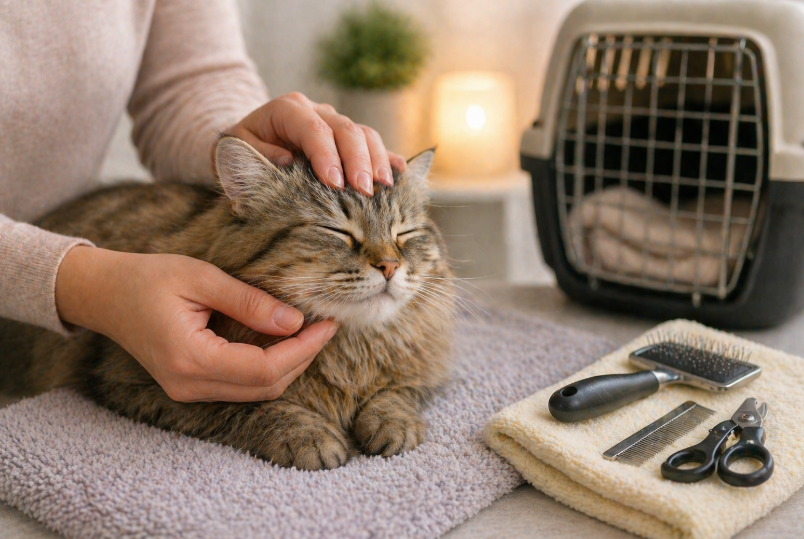
Learning how to calm your cat before grooming starts can transform the entire grooming experience from stressful to smooth. Many cats resist grooming because they feel anxious, overstimulated, or unsure about what is happening. When you prepare your cat properly, you reduce fear and create a more positive interaction.
To calm your cat before grooming starts, you need to focus on environment, timing, and your own behavior. Cats respond strongly to subtle cues, so even small changes can make a big difference. With the right approach, grooming becomes less of a struggle and more of a routine your cat can tolerate or even enjoy.
Why Cats Get Anxious Before Grooming
Understanding why your cat reacts negatively is the first step if you want to calm your cat before grooming starts. Cats are sensitive to touch, especially in areas they cannot see clearly. Grooming tools, unfamiliar sounds, and sudden handling can trigger fear.
Additionally, past experiences play a role. If a cat associates grooming with discomfort, it may react defensively even before the session begins. This anticipation builds stress quickly.
Because of this, preparation matters. When you address the root cause of anxiety, you make it easier to calm your cat before grooming starts and avoid aggressive reactions.
Create A Calm And Safe Environment
One of the most effective ways to calm your cat before grooming starts is by setting up a peaceful space. Choose a quiet area away from noise, distractions, and other pets. Cats feel safer when their surroundings are predictable.
Lighting also matters. Soft lighting creates a more relaxed atmosphere, while harsh lights can increase tension. Additionally, keep grooming tools nearby so you do not have to move around too much.
You can learn more about creating a comfortable pet environment from trusted sources like https://www.aspca.org/pet-care.
A calm environment helps your cat feel secure, which makes it easier to proceed with grooming.
Choose The Right Time For Grooming
Timing plays a crucial role when you want to calm your cat before grooming starts. Cats are more relaxed after meals or play sessions. At these times, they are less likely to resist handling.
Avoid grooming when your cat is energetic or overstimulated. Trying to groom during active periods can increase stress and lead to defensive behavior.
Instead, observe your cat’s daily routine. Pick a time when your cat naturally settles down. This simple adjustment can significantly help calm your cat before grooming starts.
Use Gentle Touch And Positive Reinforcement
Your approach matters just as much as the environment. To calm your cat before grooming starts, begin with gentle petting. This helps your cat relax and builds trust before introducing grooming tools.
Speak softly and move slowly. Sudden movements can startle your cat and undo your efforts. Offering treats during and after grooming creates positive associations.
For more bonding tips, you can explore your internal guide at /build-trust-with-your-cat or /best-ways-to-bond-with-your-cat-every-day.
Over time, your cat will associate grooming with comfort instead of stress.
Introduce Grooming Tools Gradually
Many cats react negatively because they are unfamiliar with grooming tools. To calm your cat before grooming starts, allow your cat to see and sniff the tools first.
Place the tools nearby during relaxed moments without using them. This helps your cat become comfortable with their presence. Gradually introduce gentle contact with the tool before starting full grooming.
This step reduces fear and makes the process less intimidating. When tools feel familiar, it becomes easier to calm your cat before grooming starts.
Use Calming Techniques That Work
There are several techniques you can use to calm your cat before grooming starts. Soft music or white noise can create a soothing background. Some cats respond well to calming scents such as pheromone sprays.
Wrapping your cat gently in a towel can also provide a sense of security. This method limits movement while keeping your cat comfortable.
These techniques are simple but effective. When combined with a calm approach, they help reduce anxiety and improve cooperation.
Keep Sessions Short And Positive
Long grooming sessions can overwhelm your cat. To calm your cat before grooming starts, plan for short, manageable sessions. Focus on one task at a time rather than trying to do everything at once.
End each session on a positive note. Reward your cat with treats or affection to reinforce good behavior. This creates a positive memory associated with grooming.
Over time, your cat will become more tolerant. Short sessions make it easier to calm your cat before grooming starts and maintain progress.
Recognize Stress Signals Early
Even when you prepare well, it is important to watch for signs of stress. To calm your cat before grooming starts, you need to recognize early warning signals such as tail flicking, flattened ears, or sudden tension.
If you notice these signs, pause the session. Giving your cat a break prevents escalation and helps maintain trust.
Understanding these signals allows you to adjust your approach. This awareness is essential if you want to calm your cat before grooming starts consistently.
Build A Consistent Routine
Consistency is key when you aim to calm your cat before grooming starts. Regular grooming sessions help your cat become familiar with the process. Over time, this reduces fear and resistance.
Stick to the same location, tools, and routine whenever possible. Predictability makes your cat feel more secure and less anxious.
As your cat becomes more comfortable, grooming will require less effort. A consistent routine supports long-term success and reduces stress for both of you.
When To Seek Extra Help
If your cat remains highly anxious despite your efforts, professional help may be necessary. A veterinarian or pet behaviorist can provide guidance tailored to your cat’s needs.
In some cases, underlying health issues may contribute to sensitivity or aggression. Addressing these issues ensures your cat’s comfort and safety.
Seeking help early prevents negative experiences from becoming habits. It also supports your goal to calm your cat before grooming starts effectively.
Conclusion
Learning how to calm your cat before grooming starts is not about forcing cooperation but about creating trust and comfort. By understanding your cat’s behavior and adjusting your approach, you can turn grooming into a manageable routine.
Focus on preparation, gentle handling, and consistency. Small changes can make a big difference in how your cat responds. Over time, your cat will feel more relaxed, and grooming will become easier.
With patience and the right techniques, you can calm your cat before grooming starts and build a positive experience that benefits both you and your pet.
FAQ
- Why does my cat get stressed before grooming?
Cats often feel anxious due to unfamiliar tools or past negative experiences. - What is the best time to groom a cat?
Choose a time when your cat is relaxed, such as after eating or playing. - Can treats help during grooming?
Yes, treats create positive associations and encourage cooperation. - How can I tell if my cat is stressed?
Look for signs like tail flicking, flattened ears, or tense posture. - When should I seek professional help?
If your cat shows severe anxiety or aggression during grooming sessions.

